


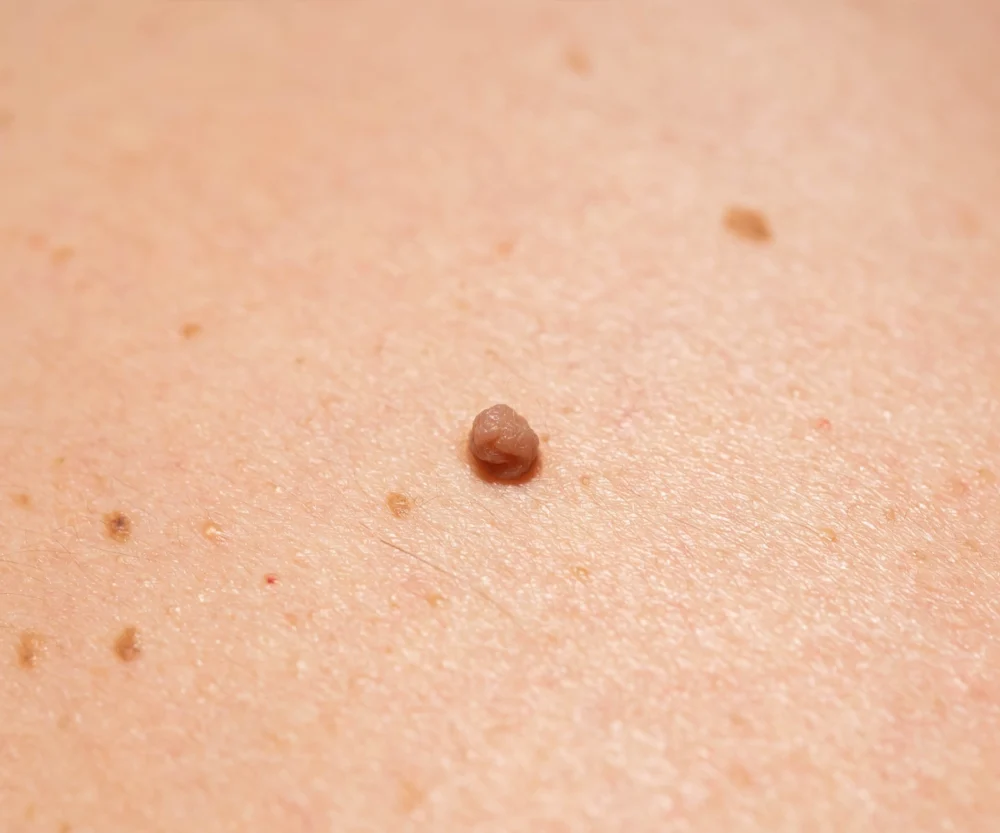
Removing skin tags – a quick and effective treatment for smoother skin
Small patches of skin, also known as skin tags or fibromas, are very common and entirely benign skin lesions. They can occur on the neck, eyelids, armpits, under the breasts or in other areas where the skin is subject to friction. Although they are not dangerous, many people choose to have them removed for cosmetic reasons or because they get caught on jewellery, clothing or when shaving.
At our clinic, we use a precision treatment involving electrocautery, whereby the skin flap is quickly removed using controlled heat energy. The treatment often takes just a few minutes and produces immediate results.

Anna Klang
Authorised Dermatologist, Cidesco
Annie Broström
Authorised Dermatologist, Cidesco
Vill du veta mer, eller boka en tid? Prata med oss
What are skin tags?
Skin tags are small, soft growths on the skin that are often attached to a thin stalk. They are common in both men and women and often become more frequent with age.
Common areas:
- neck
- Eyelids
- Armpits
- Under the breasts
- Groin
- Face
Skin tags are not dangerous, but they can become irritated or be considered a cosmetic nuisance.
Why do you get skin tags?
The exact cause is not always known, but factors that may increase the risk include:
- Friction between areas of skin
- Age
- Genetics
- Hormonal changes
- Pregnancy
- Weight gain
How are skin tags removed?
The treatment is carried out using a medical electrocautery device that utilises radiofrequency energy to remove the skin lesion with a high degree of precision.
During treatment:
- The area is being cleaned
- The skin flap is treated and removed
- Small blood vessels are sealed off at the same time, which reduces bleeding
- A small scab forms and usually heals within a few days
The treatment is quick and usually requires no lengthy recovery time.
Does it hurt to remove skin tags?
Most people experience only a brief stinging or warm sensation. Smaller skin flaps are often treated without anaesthetic, whilst larger lesions may require a local anaesthetic.
How long does it take to heal?
Healing varies depending on the size and location, but generally:
- Small skin tags: a few days
- Major changes: up to 1–2 weeks
During the healing process, it is important to:
- Don’t pick at scabs
- Protect the area from irritation
- Apply SPF to exposed areas
Will there be any scarring after the removal of skin flaps?
The risk of scarring is usually low with proper treatment and aftercare. However, the ability to heal varies from person to person.
Can skin tags come back?
The treated skin tag does not usually return, but new skin tags may form over time depending on genetics, hormonal factors and skin type.
Are skin tags dangerous?
No. Skin tags are benign skin growths and do not normally pose any health risk.
How do I know if it really is a skin tag?
If you are unsure about any changes to your skin, it is recommended that you seek an assessment from a doctor or health centre before treatment.
How long does the treatment take?
Most treatments take between 5 and 20 minutes, depending on the number and size.
Is it possible to remove several skin tags at the same time?
Yes, several skin tags can often be treated during the same appointment.
Do I need to stay at home after the treatment?
No. Most people go straight back to their normal daily routine after treatment.
How much does it cost to have skin tags removed?
Prices vary depending on the number, size and area. Please contact the clinic or check the current price list when booking.
Can skin tags on the eyelids be removed?
Yes, but this area requires extra care and a case-by-case assessment.
-
Removing skin tags in Gothenburg – quick treatment with immediate results
If you are bothered by skin tags on your neck, face or body, treatment can be a simple way to achieve smoother skin with minimal recovery time.
