


Sclerotherapy in Gothenburg – treatment of spider veins and superficial veins on the legs
At NYOclinic in Gothenburg, we offer sclerotherapy for the treatment of superficial veins and spider veins on the legs.
Sclerotherapy is particularly suitable for small blue or purple veins that are visible enough to be treated with an injection. However, the treatment is not suitable for all types of veins, so it is important to assess first whether you are a suitable candidate.

Malin Nilsson
Registered Nurse
Vill du veta mer, eller boka en tid? Prata med mig!
Which blood vessels can be treated?
Sclerotherapy is most suitable for:
- varicose veins on the legs
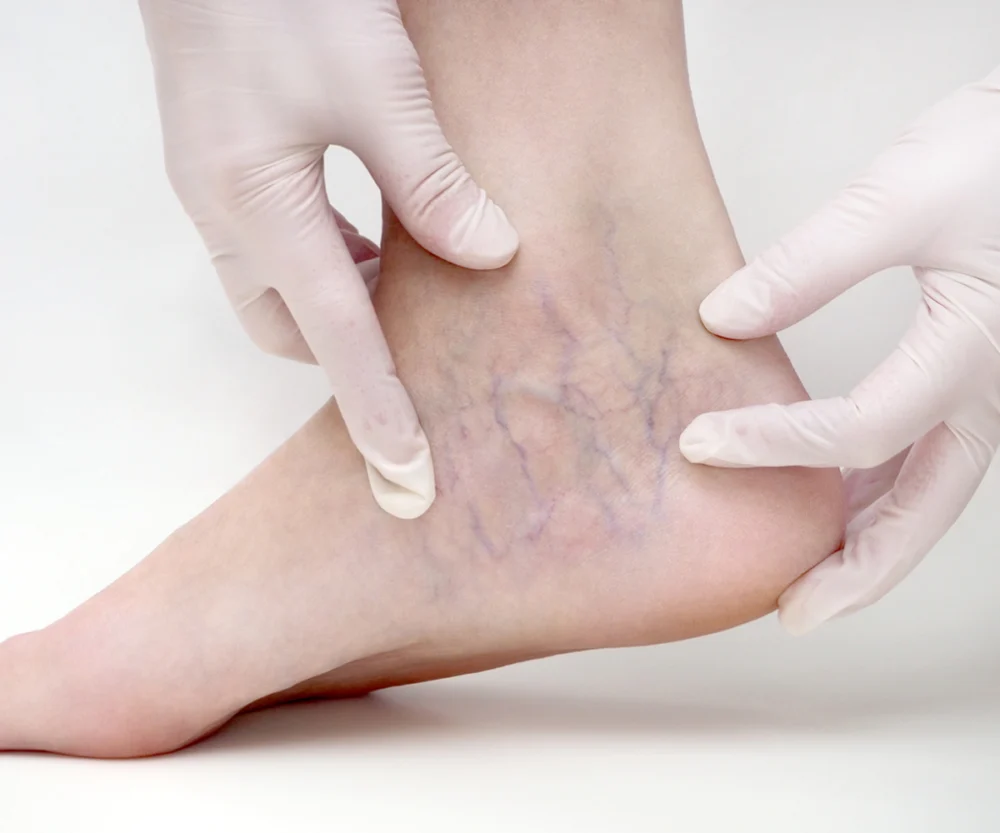
- spider veins
- small blue or purple superficial blood vessels
- smaller reticular veins
The vessels need to be large enough to be accessed with a very fine needle.
Very small and thin veins may be too small to be treated reliably with sclerotherapy. In some cases, even very superficial veins may fade as a result of the treatment, but the outcome is then less predictable.
Vessels that can be treated:
At NYOclinic, we do not treat large, prominent or raised varicose veins using cosmetic sclerotherapy. Such veins may be caused by a more extensive venous condition and may require other treatment methods or assessment by a vascular specialist.
Vessels such as not can be treated with sclerotherapy (raised)
Red veins on the face
Small, red superficial blood vessels on the face are not normally treated with sclerotherapy.
For this type of blood vessel, we instead offer vascular laser treatment at NYOclinic, which is often a more suitable option for, for example, red blood vessels around the nose and on the cheeks.
How does sclerotherapy work?
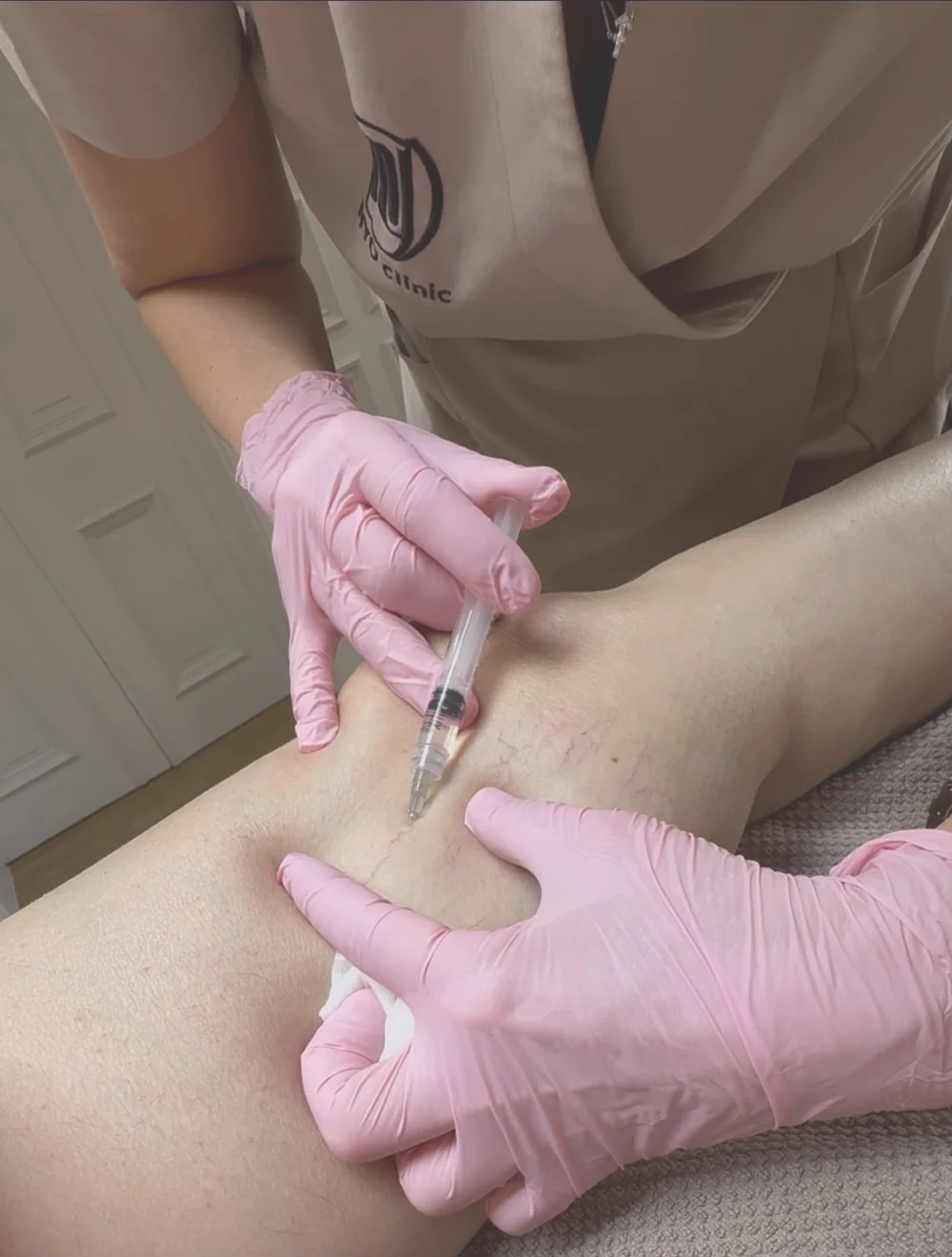
During a sclerotherapy treatment, we inject the medicine Aethoxysklerol directly into the superficial blood vessel.
The medicine acts on the vessel wall, causing the vessel to close. The blood is then channelled through other functioning veins, whilst the body gradually breaks down the treated vessel.
The treatment is carried out using a very fine needle, and small amounts of medication are injected into the blood vessels to be treated.
When do you see results?
The vessels do not disappear immediately after treatment.
They may initially become slightly darker or more noticeable before gradually beginning to fade. The results usually develop over a period of a few weeks to a couple of months.
A blood vessel that has been occluded and broken down by the body will not normally return to its original state. However, new blood vessels and a network of veins may develop in other places over time, as the tendency to develop superficial blood vessels remains.
How many treatments are needed?
It varies depending on how many containers there are and the size of the area to be treated.
Sometimes a single treatment session is sufficient, whilst larger areas or multiple vessels may require repeated treatments.
A further treatment session can usually be carried out after around 4–6 weeks, once the area has had time to heal and the results of the previous treatment can be assessed.
After sclerotherapy
After your treatment, we recommend that you continue to keep active and avoid long periods of inactivity.
During the first 48 hours or so, you should avoid:
- intense exercise, such as running and heavy lifting
- sauna and very hot baths
- solariums and intense exposure to heat
- long periods of inactivity
We also recommend avoiding Ipren/ibuprofen and other anti-inflammatory medicines, as well as high doses of omega-3, whilst undergoing treatment, unless there are medical reasons for taking them.
Never stop taking a prescribed medicine on your own initiative. If you are taking Trombyl, blood-thinning medication or any other regular medication, please let us know before your treatment.
You will be given personalised aftercare instructions during your visit.
Common reactions and side effects
It is normal to experience certain temporary reactions following sclerotherapy, such as:
- bruises
- slight swelling
- redness
- mild itching
- tenderness
- minor indurations along the treated vessels
Pigmentation following sclerotherapy
A brownish discolouration or pigmentation may sometimes occur along the treated blood vessel.
This is due, amongst other things, to the breakdown of blood in the area and is a known reaction following sclerotherapy.
In most people, the pigmentation fades gradually, but the process can be slow. It may take several months and, in some cases, up to around 1–1.5 years before the pigmentation has faded significantly.
Patients with more pronounced venous problems, a greater number of superficial veins or signs of venous stasis may be at greater risk of developing pigmentation following treatment.
When might sclerotherapy be less suitable?
Sclerotherapy is primarily a treatment for minor cosmetic vascular conditions.
If, for example, you have:
- large or protruding varicose veins
- marked swelling in the legs
- a feeling of heaviness or aching that gets worse as the day goes on
- skin changes or brown pigmentation around the ankles
- a very extensive network of blood vessels around the ankle
- a previous blood clot or thrombophlebitis
there may be an underlying venous problem. In that case, we will carry out an individual assessment to determine whether cosmetic sclerotherapy at our clinic is appropriate.
Price of sclerotherapy
1 ampoule, 2 ml: 2,690 SEK
2 ampoules, 4 ml in total: 3,690 SEK
The amount required depends on the number and type of containers to be treated. If you don’t have a huge number of containers, one ampoule should be enough.
Sclerotherapy at NYOclinic in Gothenburg
At NYOclinic, we mainly treat small network of veins and superficial vessels on the legs.
We always assess first whether the veins are of the right size and type for sclerotherapy. Our aim is to choose the right treatment for the right type of vein – not to treat veins that actually require a different method.
If you have small red blood vessels on your face, we can instead assess whether vascular laser is a better option.
Book sclerotherapy in Gothenburg
Do you have spider veins or visible blue or purple veins on your legs that you’d like to have treated?
Book an appointment for sclerotherapy at NYOclinic in Gothenburg We then assess which vessels are suitable for treatment and how many treatment sessions may be required.
