


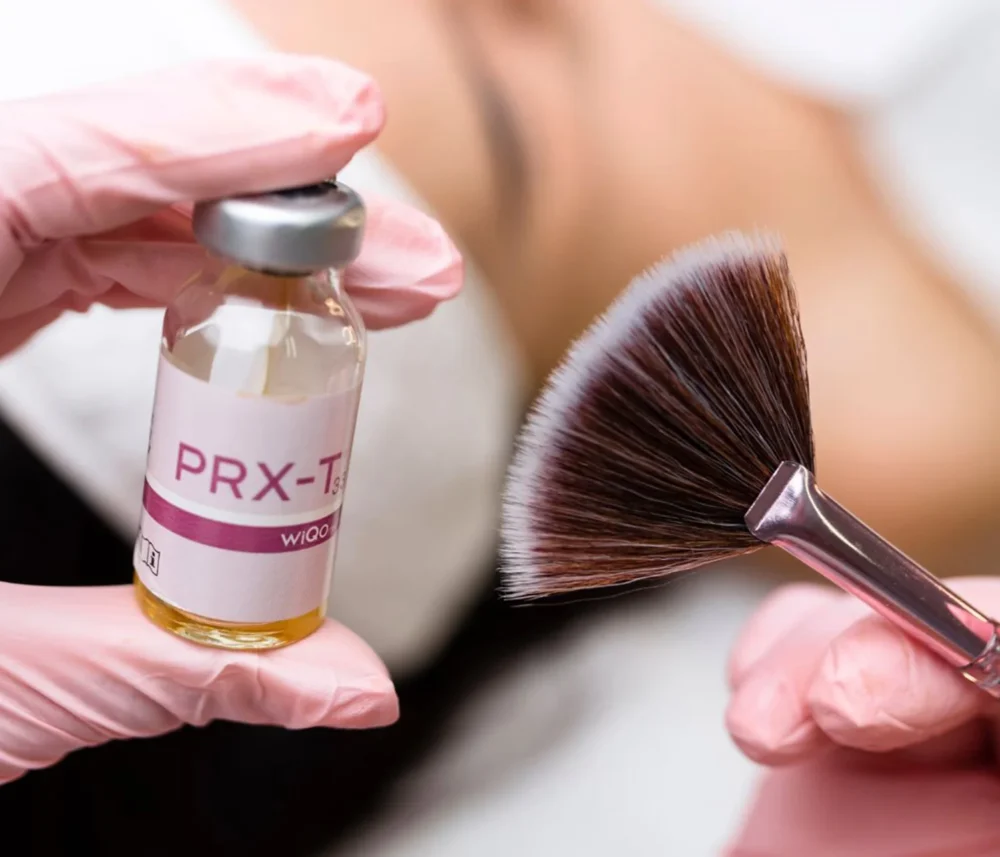
PRX-T33 and PRX-PLUS in Gothenburg
Advanced skin rejuvenation, radiance and pigmentation treatment with no lengthy recovery time
For those of you who want a healthy glow, vitality and improved skin quality
PRX-T33 and PRX-PLUS are two advanced treatments in modern aesthetic skincare that help to improve the skin’s quality, radiance and texture without the need for surgery or a lengthy recovery period.
Both treatments are designed to promote skin renewal and stimulate the skin – but in different ways and with different areas of focus.
The PRX-T33 focuses primarily on:
- collagen stimulation
- elasticity
- skin tightening
- resilience
- anti-ageing
- glow and skin quality
PRX-PLUS focuses primarily on:
- pigmentations
- melasma
- skin tone
- pores
- texture
- brightness and glow
That is why the treatment is always tailored to the skin’s needs and goals.

Anna Klang
Authorised Dermatologist, Cidesco
Annie Broström
Authorised Dermatologist, Cidesco
Vill du veta mer, eller boka en tid? Prata med oss
How does the treatment work?
The treatment begins with cleansing the skin.
The PRX product is then applied in several layers and massaged vigorously into the skin. The number of layers is adjusted according to:
- skin type
- sensitivity
- treatment area
- desired result
After the treatment, moisturising and soothing products, as well as SPF, are applied.
A treatment session usually takes around 30–45 minutes.
Does PRX treatment hurt?
Most people find the treatment mild to moderate.
An easy one:
- thermal sensation
- a stinging sensation
- tingling sensation
is common during treatment.
Some redness may occur immediately afterwards, but this usually subsides quickly.
When do you see the best results after PRX-T33?
Most people find that their skin feels at its very best around 5–7 days after the treatment.
That’s when many people realise:
- maximum glow
- improved skin quality
- a more even skin tone
- a slight tightening
- healthier and better-hydrated skin
That is why many people choose to use the PRX-T33 about a week before an important event or occasion.
Is the PRX-PLUS more powerful than the PRX-T33?
No – the treatments work in different ways and have different areas of focus.
The PRX-T33 works deeper into the skin, focusing on:
- collagen
- elasticity
- skin tightening
- anti-ageing and firmness
PRX-PLUS works more superficially and focuses primarily on:
- pigmentations
- skin tone
- pores
- texture
- glow and brightness
PRX-PLUS is therefore not necessarily “stronger”, but is more targeted at the skin’s surface and pigment-related problems, whilst PRX-T33 is more focused on deeper skin stimulation and skin rejuvenation.
How many treatments are needed?
It depends entirely on what you want to achieve with the treatment.
Many people choose to do the PRX-T33 or PRX-PLUS from time to time in the run-up to:
- event
- holiday
- party
- photography
- times when your skin feels dull, tired or less supple
As the treatment often produces a rapid glow and improves skin quality, even a single session can give the skin a fresher and more hydrated appearance.
For people who want to take a more active role in:
- pigmentations
- skin texture
- elasticity
- fine lines
- anti-ageing
- skin rejuvenation
A course of treatment lasting approximately is often recommended:
- 3–6 treatments
- at intervals of about 4 weeks
The treatment plan is always tailored to the individual, depending on their skin type, goals and the condition of their skin.
Aftercare following PRX treatment
After treatment, the following is recommended:
- SPF every day
- moisturising skincare
- to avoid strong acids and retinol for a few days
- to follow the practitioner’s recommendations
Although PRX usually causes less flaking than traditional peels, the skin may still be more sensitive after the treatment.
Does it hurt to remove blood vessels with a laser?
Most people experience a slight tingling or warm sensation. The treatment is quick and usually does not require any anaesthetic.
Do the vessels disappear straight after the treatment?
Some vessels disappear immediately, whilst others fade gradually over the weeks following treatment.
Can all types of blood vessels be treated with a laser?
No. Red, superficial blood vessels respond best to laser treatment. Blue or deeper blood vessels are usually treated more effectively with sclerotherapy.
How long does the result last?
Treated blood vessels disappear permanently, but new ones may develop over time depending on genetics, skin type and lifestyle.
Can blood vessels on the face be treated?
Yes, that’s one of the most common areas. Lasers are particularly effective for blood vessels around the nose and cheeks.
Is there a recovery period?
Minimal. You can usually get back to your normal routine straight away, but you may experience some redness for a few days.
When should the treatment not be carried out?
This treatment should be avoided in the following cases:
- Pregnancy
- Active tan
- Certain medical conditions
Is laser treatment better than sclerotherapy?
It depends on the vessels:
Face / red veins → laser
Varicose veins → sclerotherapy
