


Permanent hair removal
Quad Wavelength Diode Laser (4 wavelengths)
Do you want to do a laser treatment for permanent hair removal in Gothenburg with the latest technology? We offer safe and personalised laser hair removal for both women and men - adapted to skin type, hair type and area.
We treat with an advanced quad wavelength diode laser - an updated generation of laser for permanent hair reduction that combines four different wavelengths in the same treatment. A more modern technology than traditional hair removal lasers that often work with only one or three wavelengths.
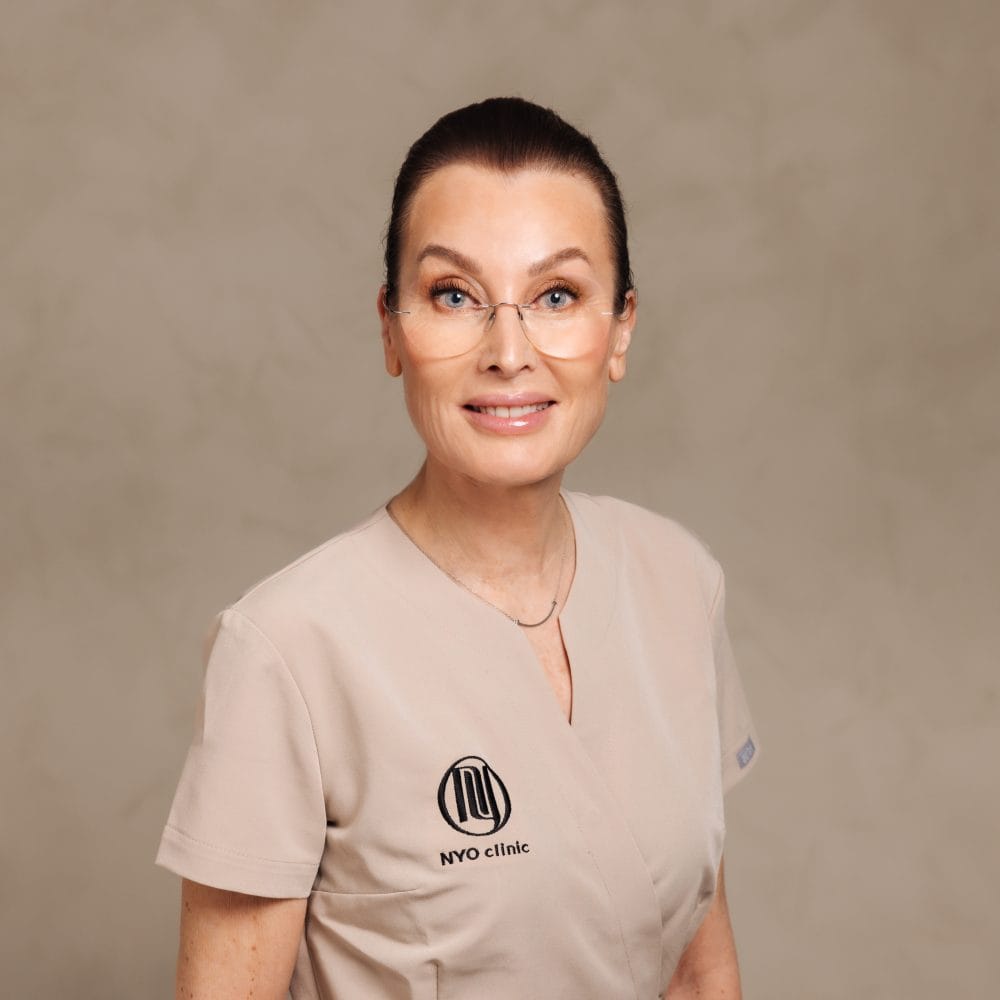
Charlotte Rönndahl
Dermatologist, Cidesco

Anna Klang
Authorised Dermatologist, Cidesco
Vill du veta mer, eller boka en tid? Prata med oss
What is permanent hair removal by laser?
Permanent hair removal by laser involves guiding light energy into the hair follicle where the pigment absorbs the energy. The heat affects the hair follicle and reduces its ability to produce new hair.
The treatment is more correctly called permanent hair reduction, as hair growth is biological and individual. The goal is a long-lasting, clear and even reduction of hair growth.
Quad Wavelength: next generation diode laser in Gothenburg
Most diode lasers operate at one main wavelength (usually 808 nm).
Our technology combines:
- 755 nm: effective for shallower and finer hair
- 808 nm: the classic and proven diode wavelength
- 940 nm: contributes to stable and even energy distribution
- 1064 nm: deeper penetration and improved treatment of deeper hair follicles
It is precisely the fourth wavelength, 1064 nm, that makes the difference.
What makes 1064 nm special?
- reaches deeper lying hair follicles
- complements other wavelengths for better coverage
- can provide stable energy delivery even with coarser hair
- is suitable even for darker skin types.
When all four wavelengths are used simultaneously, a multi-depth synergy effect, also known as the “sandwich effect”, occurs. Instead of working at a single depth, the energy covers the hair follicle from superficial to deeper levels. It provides:
- more complete energy coverage
- more even response across the treatment area
- improved effectiveness over a treatment series
- the possibility to treat more hair types in the same session.
This is why quad wavelength technology is considered an upgraded and more versatile solution in modern laser hair removal.
What areas can be treated with the Quad Wavelength diode laser?
We offer permanent hair removal in Gothenburg for:
- face (upper lip, chin, whiskers)
- armpits
- bone
- bikini line and Brazilian
- back
- stomach and chest.
Treatment is always customised to each individual.
How many treatments are needed for permanent hair removal?
Results cannot be guaranteed, as hair growth is individual. The goal is long-lasting and clear hair reduction - not absolute hair freedom. Laser only affects hair in the active growth phase, therefore multiple treatments are required.
Usually 6-10 treatments are needed at 6-10 week intervals, depending on the area and individual hair cycle. The number of treatments varies depending on:
- hormonal influence
- hair colour and thickness
- skin type
- genetic factors.
When do you see results after permanent hair removal?
Most people experience reduced hair growth after 2-3 treatments, which means thinner and sparser hair with slower regrowth. The end result develops gradually over the entire treatment series.
What is normal after treatment?
After laser hair removal, the area may react with:
- redness
- slight swelling
- thermal sensation
- mild soreness
- slight itching.
These reactions are normal and usually disappear within a few hours to a few days.
Important before and after treatment
Before the treatment
- The area should be shaved
- Avoid waxing and epilation
- Avoid sunbathing at least 2 weeks before treatment
After treatment
- Avoid strong sun
- Use SPF
- Avoid active skin products in the area for a few days
When can a laser treatment for permanent hair removal not carried out?
Treatment is not performed at/during:
- pregnancy
- active skin infection
- ongoing cancer treatment
- photosensitive diseases
- intake of photosensitising drugs
- heavily tanned skin.
Please consult us if you have:
- Hormonal disorders or hormone replacement therapy
- Active or severe herpes outbreaks in the treatment area
Important: Individual medical assessment is always done before treatment.