


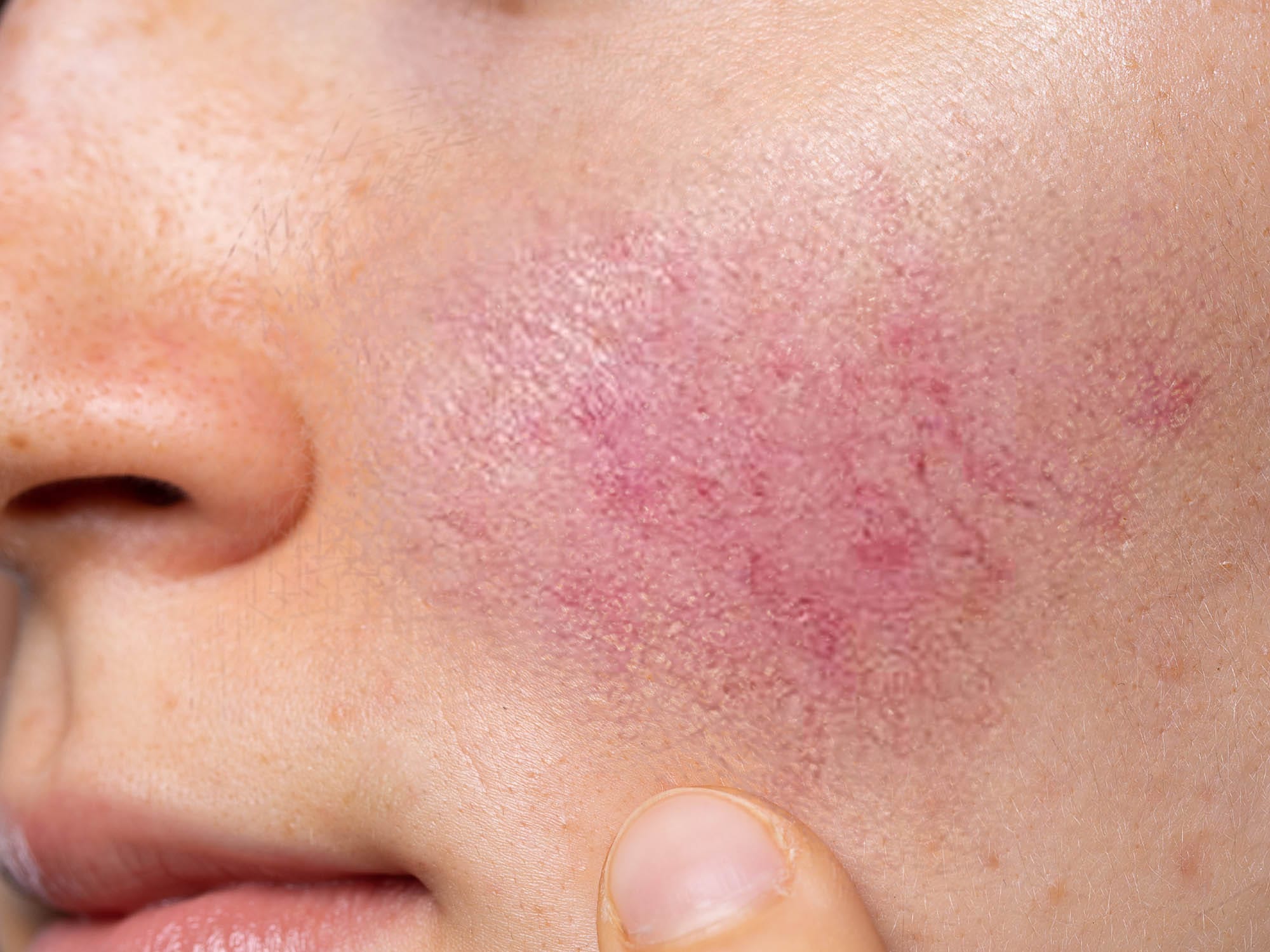
Rosacea or sensitive skin – how can you tell the difference?
Do you tend to go red in the face easily? Does your skin sting when you use skincare products, or do your cheeks turn red for no obvious reason? If so, you might be wondering whether you have rosacea or simply sensitive skin.
Rosacea and sensitive skin can cause similar symptoms, but there are important differences. Both can cause redness, irritation and discomfort, but rosacea is a chronic inflammatory skin condition, whilst sensitive skin refers to how the skin reacts to various irritants.
Understanding the difference is important for choosing the right skincare products and treatments.
What is the difference between rosacea and sensitive skin?
The main difference is that Rosacea is a skin condition, whilst sensitive skin is a condition in which the skin reacts more readily to, for example, skincare products, changes in temperature or external irritants.
Rosacea mainly affects the cheeks, nose, chin and forehead. As well as redness, you may experience visible blood vessels, red bumps and inflammatory rashes.
Sensitive skin, on the other hand, is often characterised by a stinging sensation, tightness, itching or irritation, particularly when it comes into contact with certain products.
It is also possible to have both rosacea and sensitive skin at the same time.
Common symptoms of rosacea
Rosacea can manifest itself in a number of different ways. Some people mainly experience persistent redness, whilst others develop inflammatory rashes or recurrent episodes of redness.
Common symptoms include:
- Persistent redness: The skin is often red on the cheeks, nose or forehead.
- Visible blood vessels: Small superficial blood vessels appear as thin red lines.
- Flushing: The face suddenly becomes hot and red, for example when exposed to heat, under stress or during exercise.
- Papler and Pustler: Red bumps and, occasionally, pus-filled rashes that may resemble acne.
- Stinging and a burning sensation: Your skin may feel warm, irritated and particularly sensitive.
- Dryness and irritation: The skin barrier may be compromised, which increases sensitivity.
Not everyone with rosacea experiences all the symptoms. In some people, vascular-related redness is the predominant feature, whilst others mainly experience inflammatory skin changes.
What does sensitive skin feel like?
Sensitive skin means that the skin reacts easily to things that do not normally cause discomfort.
For example, you may find that your skin:
- Does it sting when you apply skincare products?
- Feels dry, tight or irritated
- Reacts to perfumed products or strong active ingredients
- Temporarily turns red after cleaning
- Feels uncomfortable in cold weather, wind or when the temperature changes
Sensitivity can be caused by a number of factors, including dry skin, a compromised skin barrier, contact allergy or other skin conditions.
Unlike rosacea, sensitive skin does not necessarily involve persistent redness or visible blood vessels.
Five signs that may indicate rosacea
1. You have red cheeks even when your skin isn’t irritated
If the redness persists for much of the day, even when you haven’t used any skincare products, it may be a sign of rosacea.
2. You can see small blood vessels on your face
Visible superficial blood vessels on the cheeks and around the nose are common in rosacea. They do not usually disappear with moisturising skincare alone.
3. You experience sudden bouts of blushing
If your face quickly turns red and feels hot in response to, for example, changes in temperature, stress or hot drinks, this may be a case of flushing.
4. You’ll get red spots without blackheads
Rosacea can cause inflammatory nodules and pustules similar to those seen in acne. Unlike common acne, blackheads do not usually appear as a typical symptom of rosacea.
5. The symptoms recur from time to time
Rosacea often comes and goes in flare-ups. The skin may be relatively calm for a while, only to become redder and more irritated again.
These signs may provide guidance, but a definitive diagnosis requires a medical assessment.
Can a damaged skin barrier resemble rosacea?
Yes. A weakened skin barrier can cause several symptoms similar to those of rosacea, such as redness, a burning sensation, dryness and increased sensitivity.
The skin barrier acts as the skin’s natural defence and helps to retain moisture whilst limiting the impact of external irritants.
When the skin’s barrier is weakened, the skin can become more reactive and start to sting, even when using products that previously worked well.
Common causes of a weakened skin barrier include excessive exfoliation, harsh cleansing, drying skincare products and external environmental factors.
If you suspect that your skin barrier is compromised, it may be a good idea to temporarily simplify your skincare routine and prioritise gentle cleansing, moisturising and sun protection.
Rosacea, acne or perioral dermatitis?
It is not always easy to distinguish between different skin conditions that cause redness and rashes on the face.
Rosacea is often characterised by redness, visible blood vessels, flushing and, occasionally, inflammatory nodules.
acne usually causes blackheads, spots and, occasionally, deeper inflammatory rashes.
Perioral dermatitis often causes small red bumps around the mouth, nose or eyes and can sometimes be mistaken for rosacea.
Eczema and contact allergies can also cause redness and irritation.
If the symptoms are recurrent, pronounced or difficult to interpret, a medical assessment is recommended before you begin more intensive skin treatments.
How do you treat rosacea and sensitive skin?
The right treatment depends on the cause of the problem and which symptoms are most prominent.
Barrier-strengthening skincare for sensitive and reactive skin
If you have very sensitive skin, it is often best to start with a gentle skincare routine that focuses on soothing, moisturising and supporting the skin barrier.
At DrNina, our work includes, amongst other things, ESSE Skincare and offers personalised skincare advice.
Our skincare therapist will help you find products and facial treatments that suit your skin’s current condition.
IPL for rosacea with persistent redness and visible blood vessels
If the redness is primarily caused by superficial blood vessels, IPL may be a suitable treatment option.
At DrNina in Gothenburg, we use Stellar M22, an advanced IPL platform that can reduce visible blood vessels and residual redness.
The treatment is tailored to your skin type and individual circumstances. Several sessions may be required.
Clinical peel with azelaic acid
Azelaic acid is an ingredient with anti-inflammatory properties that is used to treat conditions such as rosacea.
For selected patients with stable skin, a professional chemical peel using azelaic acid may be considered to improve uneven skin tone and skin texture.
A clinical peel is not the same as azelaic acid in medicinal form and does not replace established treatment for active inflammatory rosacea.
In cases of highly reactive skin or a compromised skin barrier, the skin should be stabilised before considering a peel.
Sylfirm X for diffuse redness and uneven skin texture
Sylfirm X combines microneedling with radiofrequency and may be considered as a complementary treatment for selected patients with stable rosacea.
This treatment may be appropriate when the aim is to improve skin texture and skin quality. The scientific evidence for Sylfirm X specifically in relation to rosacea remains limited.
Botox for flushing
For some patients experiencing troublesome flushing, intradermal Botox may be considered following an individual medical assessment.
The treatment involves injecting small amounts of botulinum toxin just beneath the skin’s surface with the aim of reducing episodes of flushing.
Botox for rosacea is an off-label treatment with limited scientific evidence, and results vary.
When should you seek a medical assessment?
If you have persistent redness, recurring inflammatory rashes or symptoms that do not improve with gentle skincare, it is advisable to have your skin assessed.
If rosacea is suspected, medication may be required, particularly if you have papules and pustules.
Rosacea can also affect the eyes. If you experience recurring eye irritation, dry or red eyes, you should contact your healthcare provider. If you experience eye pain, sensitivity to light or changes in your vision, you should seek medical attention immediately.
Rosacea treatment and skincare advice in Gothenburg
At DrNina at Vasaplatsen 3 in Gothenburg We offer personalised treatments for redness, visible blood vessels, sensitive skin and various rosacea-related skin conditions.
We combine advanced skin technology with professional skincare and a personalised treatment plan.
Whether you have been diagnosed with rosacea or are unsure why your skin is reacting, we can help you understand which treatment options may be suitable.
Find out more about our rosacea treatments in Gothenburg or book a skin consultation with us.